 RV Roadie
When you live full-time in an RV, you’re always hooking up to somebody else’s water — and the quality can change a lot from one stop to the next. I’ve wanted a reverse osmosis system for a long time, mostly so we could stop relying on bottled water. Installing the Waterdrop alkaline reverse osmosis water filter under our kitchen sink was finally the move in the right direction.
We drink a lot of water. Add in a full pot of coffee every morning, cooking, and filling the pets’ water bowls, and it adds up fast. After reading reviews and comparing prices on Amazon, I went with the Waterdrop G5P700A. It’s a compact, tankless system that reduces things like PFOA, PFOS, chlorine, lead, and fluoride, then adds minerals back in before the water reaches your glass. The first thing I noticed was the taste: clean, with no funny aftertaste getting in the way.
The one trade-off I’ll admit up front is that it’s a little slower than the regular tap. That’s exactly why I picked the fastest-flowing model in its series, and I’ll explain why below.
We’ve been using it every single day for two months now, so here’s how it’s actually held up in the rig: the setup, the filters, the taste, and whether giving up bottled water was worth it.
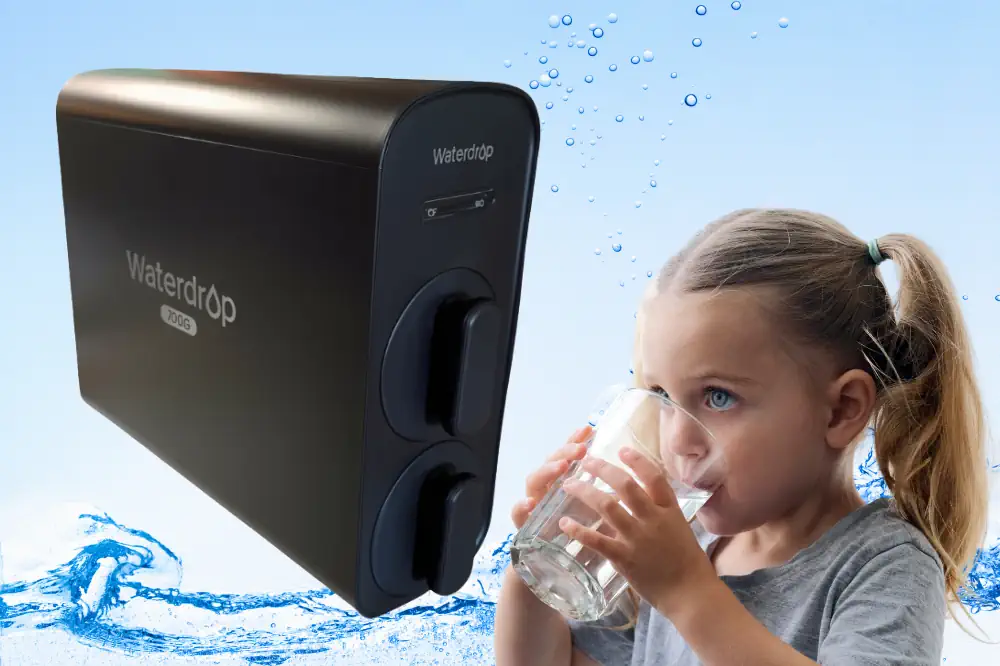
Waterdrop G5P700A Alkaline Reverse Osmosis Water Filter
What the Waterdrop G5P700A Is
The Waterdrop G5P700A is a tankless, under-sink alkaline reverse osmosis system. In plain English: it pushes your water through eight stages of filtration, including a reverse osmosis membrane fine enough to block particles down to 0.0001 microns, and then adds minerals back in before the water comes out of its own dedicated faucet.
Why add minerals back? Reverse osmosis is so thorough that it strips out the good stuff along with the bad. The G5P700A’s mineral stage puts calcium, magnesium, sodium, and potassium back into the water, which is a big part of why it tastes clean instead of flat. That’s the “alkaline” part of the name, and it’s the main difference between this model and its sibling, the G5P700, which has the same flow rate but no mineral stage.
It’s certified to NSF/ANSI Standards 58 and Standard 372, and it reduces things like PFOA, PFOS, chlorine, lead, fluoride, chromium-6, and microplastics. The materials are BPA-free, too. That checklist was exactly what I was looking for, especially since we never really know what’s coming out of the next campground’s spigot.
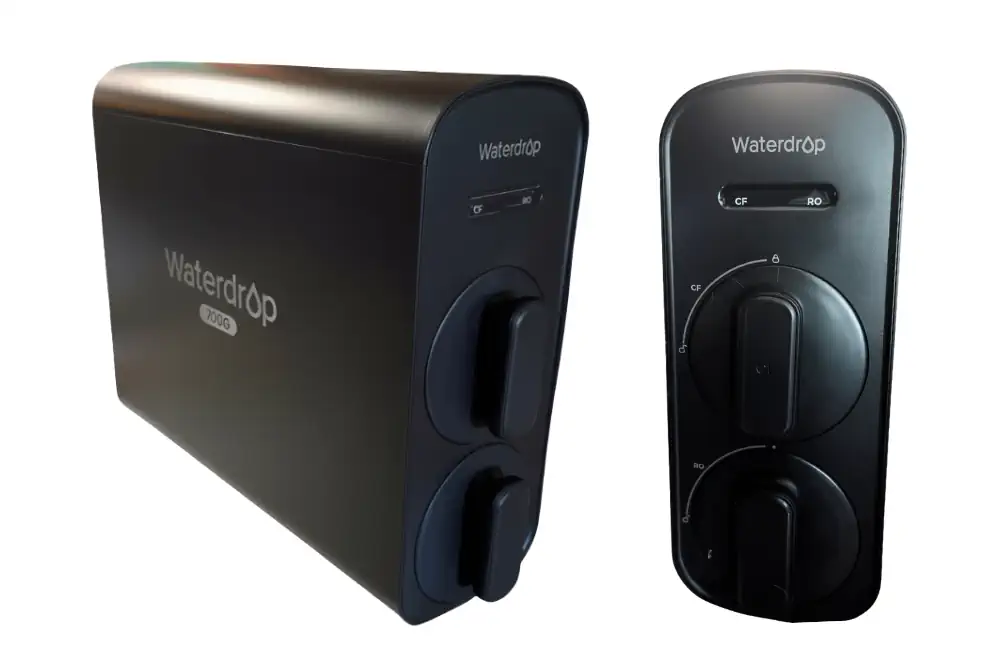
Because there’s no storage tank, the whole system is one compact unit, about 16.7 x 5.7 x 13.9 inches. Waterdrop says the tankless design saves up to 70% of under-sink space compared to a traditional tank system, and in an RV, that matters. Every inch under our sink was already spoken for, mostly by cleaning supplies I forgot I owned. It still fit beautifully.
Why We Chose the 700 GPD Model
Waterdrop makes several reverse osmosis systems, and the one spec that made the decision for me was flow rate. The “700 GPD” stands for 700 gallons per day, and it tells you how fast filtered water comes out of the faucet. The higher the number, the less time you spend standing at the sink waiting.
I’ll just say it: I’m impatient. Every morning starts with a full 12-cup pot of coffee, and I wanted to know exactly what I was signing up for. From our regular kitchen faucet, that pot fills in about 30 seconds. From the Waterdrop faucet, it takes about 50. That’s slower, but it’s a difference I can live with, even before my first cup. The lower-flow models in the lineup would have stretched that wait even longer, and that was a hard no for me.
Flow rate matters more than you might think when one faucet is handling everything. Between the coffee pot, cooking, filling the pets’ water bowls, and how much water the two of us drink in a day, that faucet gets a workout.
The other part of the decision was filter life. According to Waterdrop, the main RO filter lasts up to 24 months or 2,200 gallons, and the CF filter (the one that adds the minerals back) lasts up to 6 months or 550 gallons. Life on the road is busy enough. I didn’t want to be swapping filters every few weeks, and with this system, I’m not.
What Comes in the Box
One thing I really appreciated: it came ready to go, with both filters included. No ordering extra parts before you can even get started. According to Waterdrop, the box includes:
- The G5P700A system itself
- The CF filter and the RO filter
- The smart faucet with its LED display
- A power adapter
- Tubing and a feed water adapter to connect it to your cold water line
- A drain saddle for the wastewater line
- Teflon tape, lock clips, and a reference sticker
Everything Bob needed for the install was in there.
Installing It in an RV
Bob installed ours, and it took him about an hour. That’s impressive when you consider that Bob doesn’t read instructions. Ever. He considers them more of a suggestion. If you’re the kind of person who actually reads the manual first, give yourself a little longer — but you’ll probably be calmer about it than I was, standing behind him.
Waterdrop designed it as a DIY install, and you don’t need a plumber. But there’s one RV-specific thing you need to know before you buy: this system needs electricity. It plugs into a standard 110 outlet.
We got lucky. Our RV came with a 110 outlet right under the kitchen sink, which made the install easy. If your rig doesn’t have one there, you’ll need to either install an outlet under the sink or find a way to run power to the unit from a nearby outlet. Either way, plan for the extra time, and if you’re not comfortable doing electrical work, have someone qualified handle that part.
A couple of other things to know before you start:
- It’s rated for indoor use only. Under the kitchen sink is exactly where it belongs.
- It needs a drain connection. Reverse osmosis sends a portion of the water down the drain (more on that in the Honest Notes), so it connects to your sink drain with the included drain saddle.
- It’s about 26 pounds. Make sure the spot you’ve picked under the sink can handle it.
The Smart Faucet and Filter Life
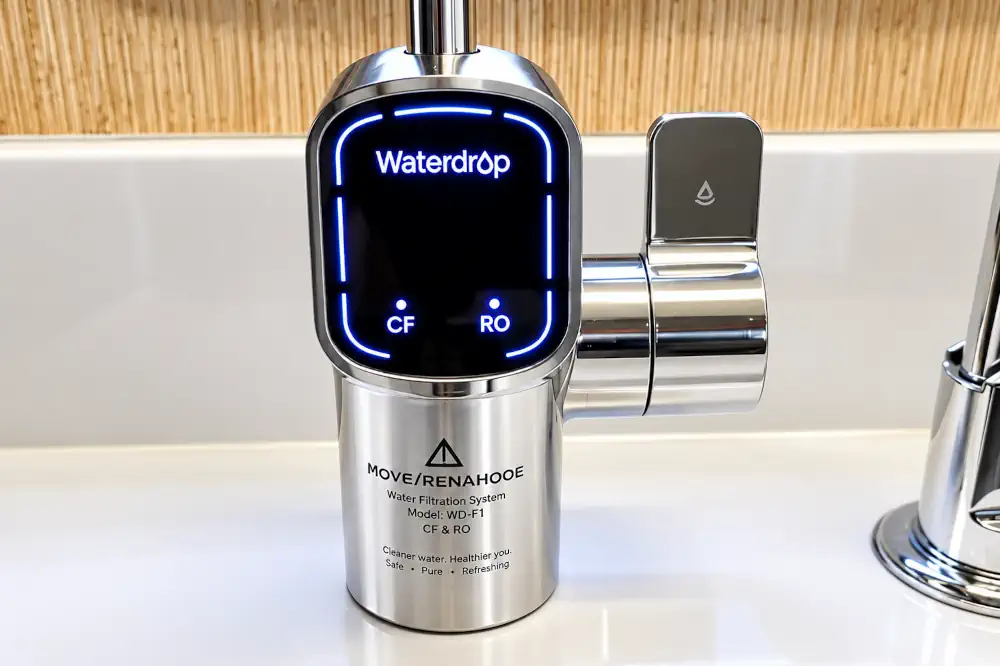
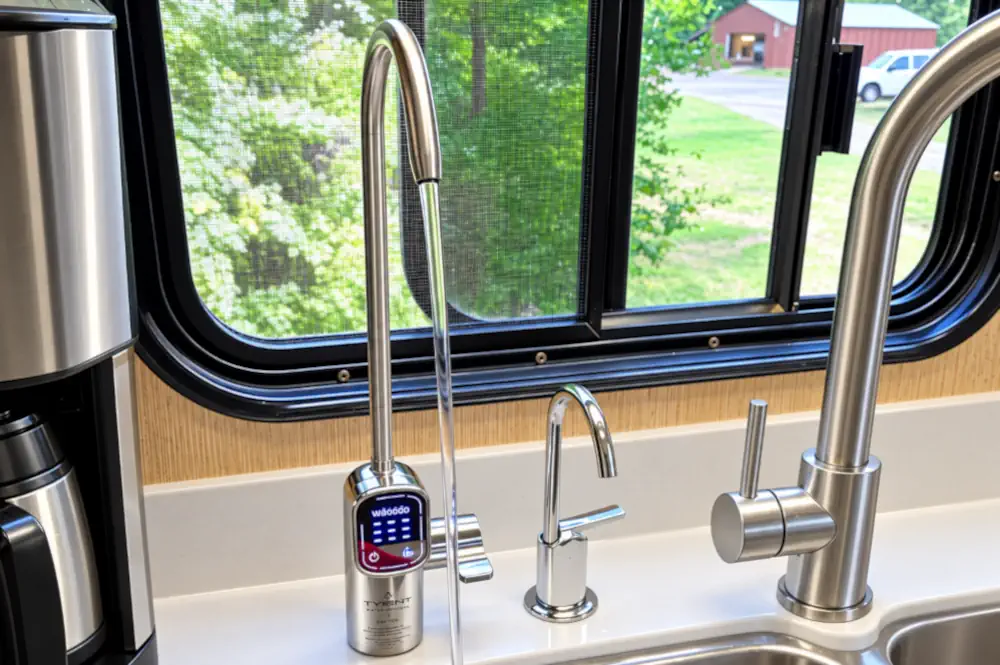
The G5P700A comes with its own faucet, and it’s one of my favorite parts of the whole system. Its digital display always shows the status of both the CF and RO filters, so you know exactly when it’s time to replace each one. No guessing required. Waterdrop says the display also shows your water’s TDS (total dissolved solids), which is a quick read on how much is in the water.
For an RVer, that’s a nice bit of peace of mind. Every new campground means new water, and having a display right there at the faucet means I don’t have to keep track of filter dates in my head.
As for replacements, here’s what Waterdrop lists:
- CF filter (adds the minerals back): up to 6 months or 550 gallons
- RO filter: up to 24 months or 2,200 gallons
On Waterdrop’s own site, the replacement filters were listed at $39.99 for the CF and $99.99 for the RO when I checked, and Waterdrop puts the average annual filter cost at about $111. Prices change, so check current pricing before you buy. And honestly? When I compare that to what we used to spend on cases of bottled water — and hauling them in and out of the RV — it’s not even close.
How the Water Tastes
This is the part that matters most, and I could tell the difference right after the install. The water tastes clean, with no funny aftertaste getting in the way. When you’re hooking up to a different water source every time you move, that’s a big deal.
We use it for everything: drinking, our morning coffee, and cooking. If you’re working on eating well on the road, good water is one of those foundations you don’t think about until you have it.
Our pets get it too, and honestly, that’s part of why I feel so good about it. They drink the same water from the same campground spigots we do, so they deserve better water just as much as we do.
Goodbye, Bottled Water
Getting away from bottled water was one of my biggest reasons for buying a reverse osmosis system in the first place, and this one finally made it happen. No more buying cases of water, no more finding a spot in the RV to store them, no more pile of empty plastic bottles — and no more worrying about the microplastics we were swallowing along with all that bottled water. Microplastics are on Waterdrop’s list of contaminants the G5P700A reduces, which made the switch feel even better.
Since we drink so much water, this was the biggest everyday change for us. It just makes me feel better all the way around.
The Pros
- Clean, great-tasting water — no funny aftertaste, no matter whose water we’re hooked up to.
- Fast flow for an RO system — at 700 GPD, it keeps up with a 12-cup coffee pot every morning.
- Compact and tankless — fits under an RV kitchen sink without taking over the cabinet.
- Smart faucet display — always shows the status of both the CF and RO filters, so you know when it’s time to replace each one.
- Ready to use out of the box — both filters included.
- Long RO filter life — up to 24 months, according to Waterdrop.
- Minerals added back — the alkaline stage keeps the water from tasting flat.
- Got us off bottled water — the whole reason we bought it.
The Honest Notes
- It’s slower than the regular tap. Our coffee pot takes about 50 seconds from the Waterdrop faucet versus about 30 from the kitchen faucet. Totally livable, but worth knowing.
- It needs a 110 outlet. If there isn’t one under your sink, plan on adding one or running power to it, which makes the install a bigger job.
- Some water goes down the drain. Waterdrop rates it at a 2:1 pure-to-drain ratio, which means for every two gallons of filtered water, about a gallon goes down the drain. In an RV, that drain water goes into your gray tank, so if you’re dry camping, keep an eye on your tank levels.
- Filters are an ongoing cost. Still much cheaper than bottled water for us, but budget for them.
- It’s only been two months. So far, zero issues, but I can’t speak to long-term durability yet. I’ll update this review once we’ve lived with it longer.
Who the Waterdrop G5P700A Is For
The Waterdrop alkaline reverse osmosis system is a great fit for RVers who:
- Hook up to different water sources and want consistent, clean-tasting water no matter where they park
- Want to stop buying, storing, and hauling bottled water
- Drink a lot of water, or use filtered water for coffee and cooking
- Have pets and want them drinking better water too
- Have a 110 outlet under the kitchen sink (or are willing to add one)
- Don’t want a bulky storage tank taking up precious cabinet space
Final Verdict: A Move in the Right Direction
After two months of using it every single day, the Waterdrop G5P700A has earned a permanent spot under our sink. The water tastes clean, it fills our coffee pot fast enough for this impatient coffee drinker, the smart faucet keeps me on top of the filters, and we’ve finally said goodbye to bottled water.
So why 4.8 and not a perfect 5? Honestly, I just don’t believe anything is perfect, and two months is too soon to know how it’ll hold up long term. So far it has worked exactly as advertised, with zero issues. Check back after we’ve lived with it for a year.
Want to see the rest of what keeps us rolling? Check out our full Essential RV Gear guide — the roundup of almost everything we use on the road.
Waterdrop G5P700A Alkaline Reverse Osmosis Water Filter
Frequently Asked Questions
Can you install a reverse osmosis system in an RV?
Yes. We installed the Waterdrop G5P700A under our RV kitchen sink, and Bob had it done in about an hour. You’ll need room under the sink, a connection to your cold water line, a drain connection, and — for this model — a 110 electrical outlet. Our RV already had an outlet under the sink, which made it easy. If yours doesn’t, you’ll need to add one or run power to the unit.
Does the Waterdrop G5P700A need electricity?
Yes. The G5P700A requires electricity and plugs into a standard 110 outlet with the included power adapter. Check whether your RV has an outlet under the kitchen sink before you buy.
How often do you replace the filters on the Waterdrop G5P700A?
According to Waterdrop, the CF filter (which adds minerals back into the water) lasts up to 6 months or 550 gallons, and the RO filter lasts up to 24 months or 2,200 gallons. The included faucet’s digital display always shows the status of both the CF and RO filters, so you’ll know when it’s time to replace each one.
What does 700 GPD mean on a reverse osmosis system?
GPD stands for gallons per day, and it’s the system’s flow rate — how fast filtered water comes out of the faucet. A higher GPD means faster filling. With our 700 GPD system, our 12-cup coffee pot fills in about 50 seconds, compared to about 30 seconds from our regular kitchen faucet.
Does a reverse osmosis system waste water in an RV?
Some water does go down the drain. The Waterdrop G5P700A has a 2:1 pure-to-drain ratio, meaning about one gallon goes down the drain for every two gallons of filtered water. In an RV, that water ends up in your gray tank, so keep an eye on your tank levels if you’re dry camping.
Is the Waterdrop alkaline reverse osmosis water filter worth it for full-time RVers?
For us, absolutely. We drink a lot of water, we’re always hooking up to different water sources, and we wanted to get away from bottled water. After two months of daily use, the water tastes clean, the filters last a long time, and it’s worked exactly as advertised.