 RV Roadie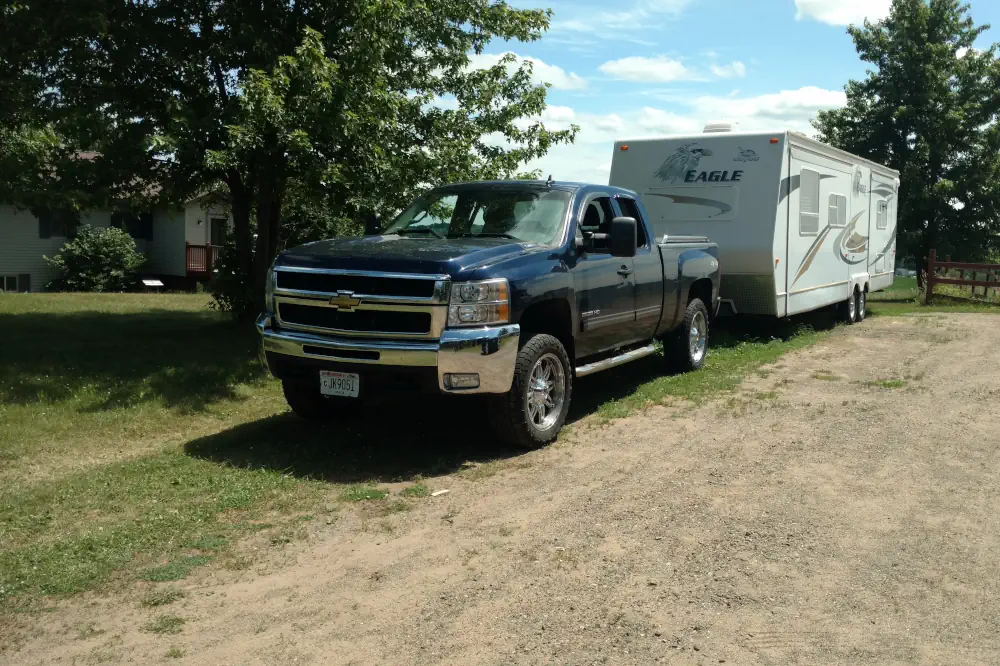
Learning how to downsize from a house to an RV was one of the biggest things we took on when we decided to go full-time. And I’ll be honest with you — it’s overwhelming. It sure was for me. I didn’t expect the whole thing to unfold the way it did, but looking back, it worked out better than I ever imagined. So I thought I’d share how we actually did it. And downsizing was only the beginning — once we were moved in, we found there was a whole set of essential skills every RVer should know that nobody warns you about, the hands-on side of road life you learn as you go.
The Starting Point
At the time, we were living out in the country — a three-bedroom home, about 2,000 square feet, with a pole barn nearly the same size and packed clear to the top. I ran my business out of the house, so the basement was full of inventory, shipping and packing supplies, and everything else that goes with running an online store.
My mother, who had been living with us, had recently passed from Alzheimer’s (God bless her soul), and I had all of her belongings too. A lot of her things ended up in that pole barn. And on top of all of it, my ex was a mechanic, so there were still old cars and parts scattered around the property.
I’d look around at everything that had to be dealt with, and all I could do was let out one big sigh.
Don’t Look at the Big Picture
Here’s the best advice I can give you, and it’s the thing that saved my sanity: don’t look at the big picture. If you stand in the driveway and try to take in the whole mountain at once — the house, the barn, the inventory, a lifetime of belongings — you’ll do exactly what I did that first day, which is sigh and go back inside. Nothing gets done from the couch.
So we didn’t look at the mountain. We looked at the next thing in front of us, and only that.
For us, the first “next thing” was putting the house up for sale and ordering a big roll-off dumpster. Once that was rolling, I made the hardest call of the whole process: I closed down my online business. There was simply no way to keep packing and shipping orders from an RV, let alone find room for inventory — I’ve seen what fits in our basement, and none of it was coming with us.
I did decide to keep doing the seasonal shows and festivals, since those actually fit beautifully into life on the road. But the online store had to go. That one stung, and I let it sting for a day, and then I went back to the next thing in front of me.
Sell, Sell, Sell
A house can sell in a week or sit for six months — there’s no telling — and I wasn’t about to get caught with a “Sold” sign in the yard and a barn still full of stuff. So we didn’t wait. We started selling everything we could, right away.
As it turned out, our timing was pure luck. This was 2020, right in the thick of Covid, and we’d landed smack in the middle of a red-hot seller’s market. The house didn’t sit — it sold fast. But here’s the thing: I had no way of knowing it would go that quickly when we started, and I’m glad we didn’t gamble on it. Selling early meant that when the house went, we weren’t scrambling.
We spread the rest across every channel we could find, because different things sell to different people:
- Business inventory went at reduced prices through my website and eBay.
- Personal belongings went on Facebook Marketplace and by word of mouth.
- Furniture and household items went on Marketplace, eBay, Craigslist, and word of mouth.
To keep from losing my mind, I sorted everything into three piles:
- Things to sell — the easy yeses.
- Things I wasn’t sure about — the dangerous pile.
- Things I absolutely would not sell — mostly sentimental: photos, family gifts, the pieces of my mother I wasn’t ready to part with.
That middle pile is the one that’ll get you. “Not sure” is where things go to sit forever, and if you let it grow, you’ll be hauling a truckload of maybes down the road with you. My rule became simple: if it lived in the “not sure” pile too long, it moved to “sell.” The RV would decide for me — if there was no room, there was no room.
The hardest part of downsizing was never the furniture or the dishes. It was always the sentimental things. Those you don’t sell so much as make peace with.
Buy That RV
The other big step was finding an RV — and honestly, that could be a whole separate post on its own. Here’s the puzzle nobody warns you about: when you’ve never lived in an RV, how on earth are you supposed to know what you’ll need? You don’t know what you don’t know yet.
Coming from a house, my instinct was space — plenty of room and plenty of storage. And since I love to cook, I already knew the kitchen was going to be my sticking point.
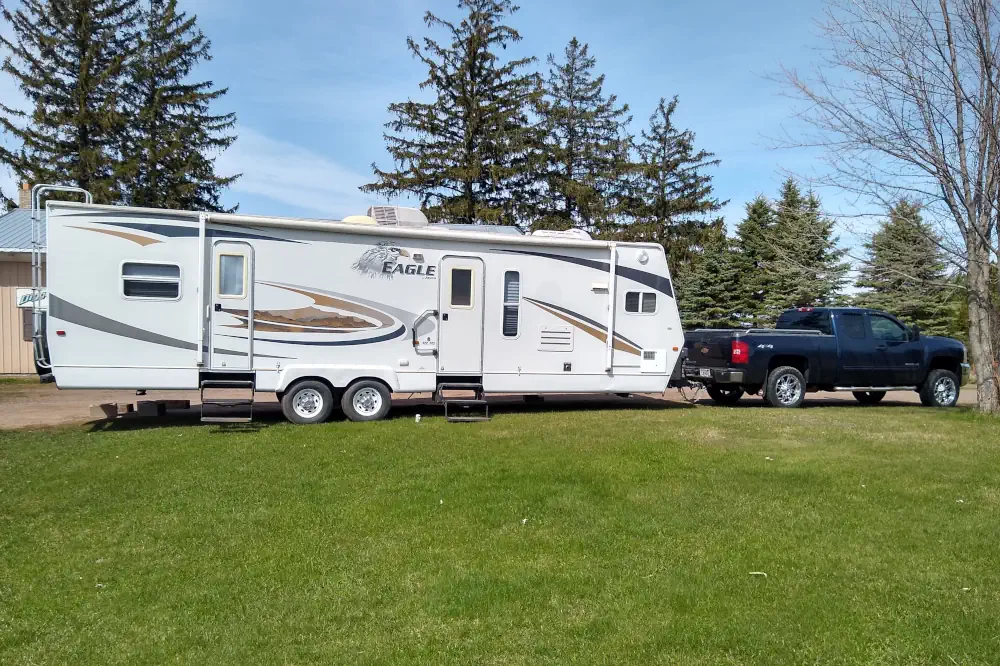
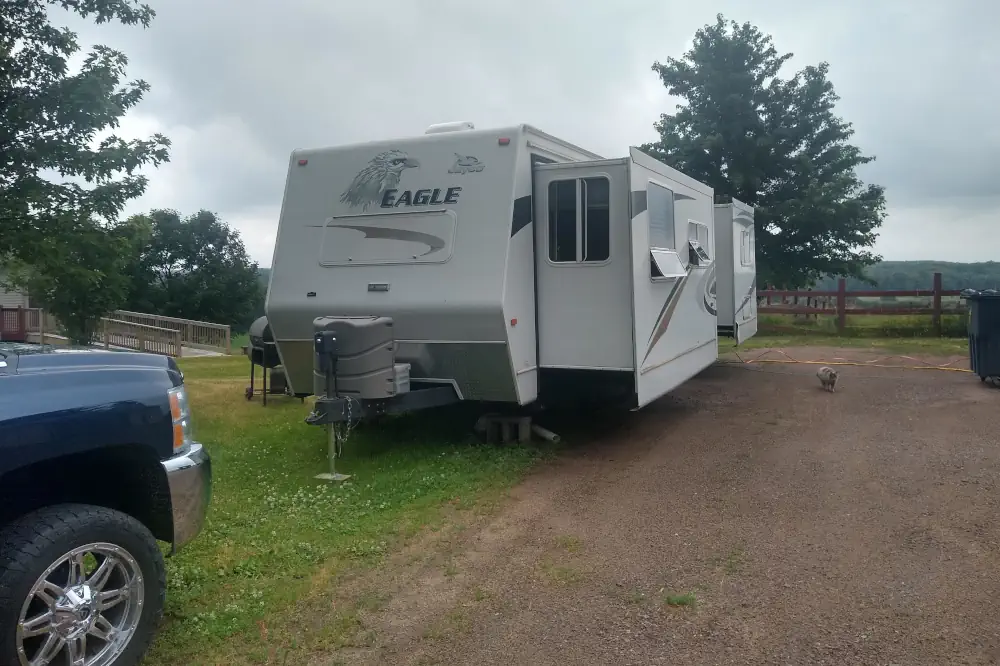
Our first RV turned out to be a 34-foot Jayco travel trailer with two slide-outs and — the part that thrilled me — a king-size bed. The kitchen had more room than most, though still not quite enough. I could see the adjustments coming.
Park the RV in Your Driveway
We parked the RV in the driveway — right next to the big dumpster, which made for quite the curb appeal. And that’s when it hit me: why are we still sleeping in the house? Why not just live in the RV while it’s up for sale?
So that’s exactly what we did.
It worked out better than we could’ve planned. For starters, the house stayed spotless. With nobody living in it, keeping it show-ready was easy — an agent could call with two hours’ notice and instead of frantically hiding laundry, we’d glance over from the RV and say, “Yep, it’s ready.” Turns out the tidiest way to sell a house is to not live in it.
But the real payoff was the practice. We got to actually live in the RV while we were still parked at home, learning the ropes with a safety net. Every time we realized we were missing something, we could just walk back into the house and grab it. By the time we finally hit the road, we weren’t guessing — we knew exactly what we needed and, just as important, what we didn’t.
Passing Things On, and Clearing Out the Rest
The selling dragged on for more than a month. But once I’d sold everything that was going to sell, what was left wasn’t merchandise anymore — it was the personal stuff, the things with a story attached. So I invited my kids to come through first. They took family photos, keepsakes, and pieces of their grandmother’s belongings, and there was something healing in watching her things go to people who’d love them. After the kids, friends came by and took what spoke to them.
Then came the boxes — photos, home videos, even old reel-to-reel tapes, decades of us. An RV was never going to hold it all, so I kept a precious few, mostly of the kids and family, and let my children keep the rest.
When there was nobody left to hand things to, I called a local thrift store owner who bought a surprising amount — and cheerfully hauled off a good deal of what I simply gave away. (I’ve never seen a man so happy to take my problems off my hands.)
But one thing I couldn’t just sell. My mother had been a Hummel collector — nearly 100 figurines, a lifetime of them. Nobody in the family wanted them, which broke my heart a little. Then I found an older woman who adored Hummels the way my mother had, and I gave them to her. Every one. I wouldn’t take a dime for them. She stood there with tears running down her face, and I’ll be honest, I got a little misty myself. That was the moment I knew they’d gone exactly where they were meant to go. Some things aren’t worth what you can sell them for — they’re worth the face of the person you give them to.
I donated the rest — clothing, and some nice winter coats we no longer needed. Which brings up a tip for anyone going full-time: you don’t need a closet full of heavy coats. If you plan to chase the warm weather like we do, one good coat is usually plenty. Let the rest go warm somebody else.
Don’t Forget the Curbside
By the very end, I was down to the stuff I was sure nobody would want. Pallets, worn-out brooms, broken chairs, odds and ends that had no business existing anymore. I figured all of it was headed straight for the dumpster.
But before I gave up on it, I dragged it all out to the curb, slapped down a big cardboard sign that read FREE, and walked away. I did this for the last few days of the move, restocking the curb like some sad little roadside boutique.
It all went. Every last piece. The broken chairs, the busted brooms, the pallets — gone, usually within the hour. I stood at the window more than once, genuinely amazed, watching a total stranger load up a pallet like they’d struck gold. You would not believe what people will collect. If it’s free and it’s sitting at the curb, somebody out there wants it.
So before you pay to throw anything away, put it out with a FREE sign first. Let your neighbors do your hauling for you — and save that dumpster space for the stuff even the curb won’t take.
Making Sacrifices
Let’s be honest: downsizing means making sacrifices, and some of them sting. The hardest one for me? Parting with my beloved KitchenAid stand mixer. That thing was practically a member of the family, and I traded it for a little hand mixer that fits in a drawer. I still miss it some days. But the counter space I got back? Worth it.
Once I made peace with that, the rest got easier — and honestly, smarter. Instead of hauling an air-fryer, a toaster, and an oven, I switched to a single air-fryer/convection oven combo that does all three jobs in the footprint of one. Then I added an Instant Pot, which might be the MVP of RV cooking — it’s a slow cooker when I’ve got time and a pressure cooker when I don’t, all in one pot. In a kitchen where every cabinet counts, anything that pulls double duty earns its keep. (If you’re curious what else made the cut, I rounded up everything we actually use in our Essential RV Gear guide.)
Bob had his own sacrifices to make. He parted with most of his tools, holding onto only the true essentials — which, if you’ve ever met a man and his tools, you’ll know was no small act of love.
We each got to keep our favorites, and living in the RV for that month beforehand told us exactly what those needed to be. What surprised us was how the sacrificing didn’t stop once we hit the road. For a while, we paid monthly for two storage sheds full of “overflow” — the stuff we couldn’t quite let go of. But over those first couple of years, we kept whittling it down, realizing we barely touched most of it. Eventually we built a small shed at our summer spot for the few things worth keeping, and cut the storage rent loose for good. Turns out the less we owned, the lighter everything felt.
Adjusting to RV Life
Here’s a truth every full-timer learns fast: RV refrigerators are tiny. The one that came with our rig felt like it was designed for a college dorm, not two people who actually cook. You’d do one grocery run and it was full. So one of the best changes we ever made was pulling it out and putting in a full-size residential refrigerator and freezer — the same kind you’d have in a house.
And because I apparently never do anything halfway, we added a small mini freezer too. That one’s earned its keep more than almost anything we own. When we make a big haul to Costco or Sam’s Club, we’ve actually got somewhere to put it all — meat, frozen veggies, the works. No more squeezing a month’s worth of groceries into a freezer the size of a shoebox.
That whole setup paid for itself. Suddenly we could buy in bulk, stock up when things went on sale, and stop running to town every time we wanted a proper meal. In full-time RV life, where every dollar and every trip to town counts, real cold storage quietly saves you both.
Clothing was the opposite lesson — there, less was the upgrade. We pared down hard, and it turned out we barely missed a thing. You simply don’t need a closet full of heavy clothes on the road; a few versatile pieces you can layer will carry you through most of what the weather throws at you. Fewer clothes, less laundry, more room. I’ll take that trade every time.
Helpful Tools and Resources
A few things we’ve leaned on along the way, in case they help you too:
- RVShare.com: View their RV downsizing articles
- Downsizing Checklist: Get our handy RV downsizing checklist
- Kitchen Gear: Collapsible kitchen gear
- RV Essentials: Must haves for RV
- Camping Membership: RV Life Trip Wizard
- Mail and Address: Once the house sells, here’s how we get our mail on the road
Final Thoughts
I won’t sugarcoat it: downsizing from a house to an RV isn’t easy. It takes time, patience, and more decision-making than you’d ever expect — some of it practical, some of it emotional, all of it worth it. But once you’ve sold, donated, and given away the excess, what’s left on the other side is something you can’t box up: freedom.
Living with less has a way of teaching you what actually matters. We traded a house and two storage sheds for a life we can drive anywhere, and somewhere along the way we stopped missing the stuff entirely. For us, that trade has been worth every single sacrifice — and if we could do it, so can you.
Frequently Asked Questions
How do I decide what to keep when downsizing to an RV?
Start with three piles: must keep, not sure, and let go. Prioritize the essentials, the things you use daily, and the deeply sentimental pieces. That middle “not sure” pile is the tricky one — it’ll grow if you let it. My rule was simple: if something sat in “not sure” too long, it moved to “let go.” And here’s the real secret — living in your RV before you hit the road will reveal what you actually need faster than any list can.
What do I do with sentimental items that won’t fit in the RV?
These are the hardest, no way around it. Your best options are passing them to family who’ll treasure them, digitizing old photos and videos so they take up no space at all, or keeping a small “memory box” of the few things you can’t part with. When we downsized, I gave most of our family photos to my kids and kept only a precious handful — the memories didn’t disappear, they just spread out among the people who were in them.
Do I need a storage unit when I move into an RV full-time?
Not necessarily. Some RVers keep a small unit for seasonal or sentimental things; others skip it entirely to save the monthly rent. We actually paid for two storage sheds our first couple of years, then slowly realized we barely touched what was in them. Eventually we built a little shed at our summer spot and cut the rent loose for good. My advice: live in your RV a few months before you commit to storage — you’ll likely need far less than you think.
How can I make the small RV kitchen work for me?
Multipurpose tools and compact appliances are everything. An Instant Pot alone can replace a slow cooker and a pressure cooker, and an air-fryer/convection combo does the job of three appliances in the space of one. Keep only the cookware you truly use, and lean on nesting or collapsible items to save room. And if your RV allows it, swapping the tiny built-in fridge for a residential refrigerator is a game-changer — it’s the upgrade I’d recommend to any full-time cook.
What’s the best way to get rid of all the extra stuff?
Use a mix, because different things move in different ways. Sell the bigger stuff on Facebook Marketplace or eBay, invite family and friends to take keepsakes first, and donate the rest to a thrift store. For the final odds and ends — the broken chairs and stray pallets — set them at the curb with a big FREE sign. You’ll be amazed what disappears within the hour. If the sheer volume feels overwhelming, an auction or estate-sale company can take a lot off your plate too.