 RV Roadie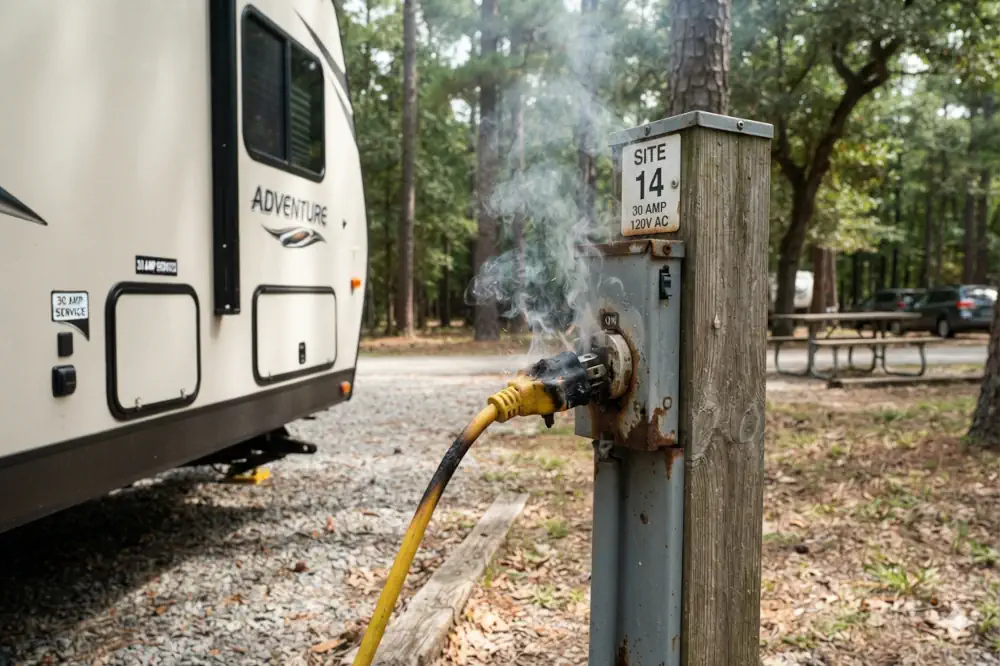
So, you’re dreaming of hitting the open road and living full-time in your RV? That’s awesome! But before you trade in your house keys for a steering wheel, let’s talk about essential RV gear that you really need to make the transition smooth and enjoyable. This list breaks down the absolute essentials and some “nice-to-haves” that can seriously upgrade your RV lifestyle.
Essential RV Gear: The Must-Haves
Water Filter System (Inline and/or Under-Sink):
Clean water is non-negotiable, and RV park water can vary wildly in quality. Over the years we’ve tried several inline filters that connect to your hose, and these are the ones we keep coming back to. Why? They actually filter out even the smallest debris and particles — the cheaper ones we tried didn’t. How did we know they were failing? By what we’d find stuck in our kitchen and bathroom faucet screens. Once we switched to these, those screens stayed clean. An inline filter is a great start, but for drinking and cooking water we go a step further with the Waterdrop G5P700A alkaline reverse osmosis system under our kitchen sink. It’s how we finally gave up bottled water — read our full Waterdrop alkaline reverse osmosis water filter review for the install, the taste, and what it’s like to live with in an RV.
RV-Specific Toilet Paper:
Regular toilet paper doesn’t break down properly in RV black tanks and can cause clogs – a messy and unpleasant problem you definitely want to avoid. Although it is generally recommended to use RV-specific toilet paper (more expensive), we have found that we can use pretty much any septic safe toilet paper, such as Scott, Charmin or Northern as long as you use plenty of water when flushing and use RV Digest It+ in your tank. We have never had any issues with clogs or the dreaded poop pyramids using this method. Check out our review on RV Digest It+ here.
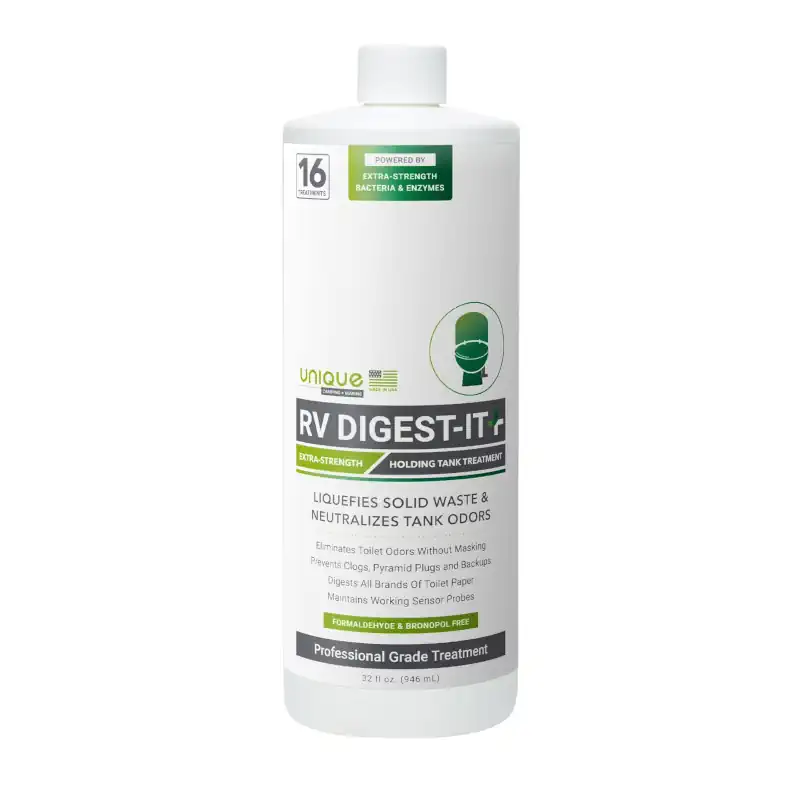
RV Digest It
Sewer Hose and Fittings:
Dealing with waste isn’t the fun part of RV life, but doing it right saves you a world of headache. Don’t cheap out on your sewer hose — go thick and sturdy, and get one with a good range of fittings so you can connect at whatever the next dump station throws at you. We use the Camco RhinoFLEX 20-ft complete sewer hose kit, which comes with the fittings you actually need. And do yourself a favor: get a clear elbow fitting so you can see when the flow runs clean. Trust us on that one.
Water Pressure Regulator:
RV park water pressure can be surprisingly high, and too much of it can damage your rig’s plumbing and appliances. I’ll be honest with you — we don’t use a regulator anymore. My husband checks the pressure himself by turning the spigot on before we connect our hoses, so we get a feel for it first. Is it the textbook method? Probably not. But so far, so good, and it’s worked for us. That said, if you’d rather have the peace of mind (and a lot of folks do), this water pressure regulator comes highly recommended — it keeps your water pressure at a safe, steady level so you don’t have to think about it.
Wheel Chocks and Leveling Blocks:
Safety first! Wheel chocks are essential for preventing your RV from rolling, especially on uneven ground. Leveling blocks help you get your RV perfectly level, which is crucial for appliance operation (especially refrigerators) and general comfort.
Surge Protector:
Electrical surges can fry your RV’s electrical system in an instant, and a surge protector safeguards your electronics and appliances from voltage spikes and other electrical problems. Now, I’ll be honest — I’m the worry-wart about fires. It’s the one thing I obsess over. For the longest time my husband did all the hookups and brushed me off whenever I said we needed a surge suppressor. “You know how people think,” he’d say, “fires only happen to other people, not us.” Well. One day I was working in the camper and kept smelling something burning. His nose is shot, so he didn’t smell a thing — but I hunted it down, and our plug going into the campground outlet was black and fried. Thank God it didn’t reach the camper, or happen while we were sleeping. Lesson learned: never argue with the wife. Get the surge protector. Consider an EMS (Electrical Management System) for even more comprehensive protection.
RV Surge Protector 30 Amp
Propane Leak Detector:
Propane leaks are no joke — you’re dealing with a flammable gas in a small space, and you can’t always trust your nose to catch it in time. Speaking of noses… it was summertime, windows open at night, and I’d just cooked dinner on our propane stove. We were both sitting at the kitchen table by the window when I started smelling propane. My husband — the man with the broken nose — insisted it couldn’t be us, had to be the neighbor (and campgrounds pack you in close). I kept saying we should go warn the neighbor about his leak; he said he’d do it in the morning. Well, morning came, he never caught the neighbor, and we packed up for the next campground. Got all set up, sat down at the table with the windows open, and there it was again — propane. Now he couldn’t argue. It was us the whole time, and realizing I’d been cooking inside with that leak absolutely freaked me out. So learn from us: get a propane leak detector. Please.
First Aid Kit:
Accidents happen. A well-stocked first aid kit is a must-have for any RV trip. Include bandages, antiseptic wipes, pain relievers, allergy medication, and any personal medications you require.
Basic Toolkit:
You don’t need to be a mechanic, but having a basic toolkit with essential tools like screwdrivers, pliers, a wrench, and a hammer will allow you to handle minor repairs and maintenance tasks on the road.
Portable Jump Starter:
Dead batteries are a common RV problem. A portable jump starter can get you back on the road quickly without having to rely on someone else for a jump.
Navigation System (GPS):
While smartphones are great, if you’re driving something tall — a big trailer or a Class A — you’ll want a GPS unit with a truck mode that warns you about low bridges coming up. Trust us, there are a lot of them out there. Google Maps doesn’t have a truck routing mode and won’t flag low clearances — it’s built for regular cars, not for something with your height and weight. That said, before we got our Class A, we just used Google Maps on our phones and it worked fine. It really comes down to how tall your rig is.
RV Air Conditioner:
When you’re living or traveling in a metal box in the summer sun, a working air conditioner isn’t a luxury — it’s the difference between a comfortable rig and a miserable one. If the unit on your roof is tired, loud, or on its way out, replacing it is one of the upgrades you’ll feel every single day. We recently swapped ours for a Fogatti InstaCool Ultra and have been thrilled with it — quiet, easy to use, and it finally cools the hot spot our old unit never could. If you’re weighing a new rooftop AC, read our full Fogatti RV air conditioner review for the whole story, including the DIY install.
Essential RV Gear: The Nice-to-Haves
Staying Connected: Starlink
If there’s one thing that changed the game for us out here, it’s Starlink. Working remotely from the road means we have to have reliable internet, and campground WiFi and cell signal just don’t cut it in a lot of the places we love to be. Starlink has kept us online in spots where we honestly didn’t expect any signal at all. It’s not the cheapest thing in the rig, but for us it’s been worth every penny — it’s the reason I can run my business from wherever we happen to park. We run the Starlink Mini on the Roam plan, and after a year and a half of daily use I’ve written up exactly how it’s held up — read our full Starlink Mini review for real data usage, setup, and speeds. If you want to give it a try, you can use our Starlink referral link — it helps us out, at no extra cost to you.
Portable Generator:
This one falls under nice-to-have rather than need-to-have, but if you plan on boondocking or camping where there are no hookups, a portable generator gives you a reliable way to run appliances, charge devices, and keep the essentials going. The big thing is getting the right size for your rig — too small and it won’t run what you need, too big and you’ve overspent and lugged around more than you’ll use. I’m putting together a full guide on how to figure out the right size generator for your RV, and I’ll link it here once it’s ready.
RV Cover:
If you plan on storing your RV for extended periods, an RV cover will protect it from the elements, preventing sun damage, water leaks, and other issues.
Portable Grill:
Enjoying outdoor meals is a big part of the RV lifestyle. A portable grill allows you to cook delicious meals wherever you go. For us, we don’t need a large grill and our favorite is the Weber Smokey Joe Charcoal Grill.
Trip Planning: RV LIFE Trip Wizard
Planning a route in an RV is a whole different animal than punching an address into your phone. You’ve got to think about your rig’s height and weight, whether the campground can actually fit you, and where you’re going to fuel up along the way. For years I did it the hard way — a dozen browser tabs, campground reviews on one screen, a map on another, and a lot of guessing. RV LIFE Trip Wizard pulls all of that into one place. It maps RV-safe routes around low bridges and tight roads, helps you find and compare campgrounds, and lets you plan realistic driving days so you’re not rolling into a park after dark. It’s become the tool we actually plan our travels around, and it pairs right up with that truck-mode GPS I mentioned earlier.

Camp Chairs and Table:
Not every campsite comes with a picnic table, so it’s smart to have your own seating and at least a small table. We go with these chairs because they’re heavy-duty, come with a built-in table, and pack up in their own carrying bag — easy to haul and one less thing to think about at setup.
Outdoor Rug:
For years I just used whatever rugs we had lying around, never understanding why people invested in the big store-bought ones. Then last year a friend gave us her old one — looks brand new to me — and the second we laid it out, I got it. They’re waterproof! The material doesn’t let dirt stick either, so you just sweep it now and then and hose it off if it gets really grimy. I love our camping rug, and I’m a convert. It keeps the dirt and debris out of the RV and gives you a nice clean surface to walk on around your site. Here are some at Amazon you can check out.
Folding Ladder:
Reaching the roof of your RV for cleaning or maintenance can be challenging without a ladder. A folding ladder is compact and easy to store.
Electric Kettle:
Boil water quickly and easily for coffee, tea, or cooking with an electric kettle.
Instant Pot:
If we had to pick a favorite kitchen appliance, the Instant Pot is it — hands down. We can’t say enough good things about ours. You can toss in frozen ingredients and have dinner done in a quarter of the time it’d normally take, and it handles just about anything you throw at it. In a small RV kitchen where space and energy both matter, that kind of do-it-all convenience is hard to beat.
Portable Air Compressor:
Keep your tires properly inflated with a portable air compressor. This is important for safety and fuel efficiency. My husband is a DeWalt guy, and this is the one we use.
Tire Pressure Monitoring System (TPMS)
If our blown-trailer-tire story taught us anything, it’s that you can lose a tire without hearing a sound or feeling a thing. A tire pressure monitoring system watches every tire for you and warns you before a slow leak or a jump in heat becomes a blowout on the highway.
The right one really depends on your rig — how many tires you’re running, whether you’re towing a trailer or driving a motorhome, and how many sensors you need to cover it all. So instead of pointing you at one specific unit, here’s a good range of RV tire pressure monitoring systems so you can match one to your setup.
Whatever you land on, the idea’s the same: let the monitor catch the trouble while it’s still just a warning light — not a mess on the shoulder.
Cell Signal Booster:
To date, I haven’t needed one of these — I figure when the day comes, I’ll invest then. For now, my Starlink and phone hotspot have done a great job keeping us connected. But if weak signal is a worry for you, Amazon offers several kinds to choose from depending on your setup.
This list should give you a solid starting point for equipping your RV for full-time living. Remember to prioritize the essentials and then add the nice-to-haves as your budget and needs allow. Share and enjoy and Happy travels!
Frequently Asked Questions
What exactly do you mean by essential RV gear? Is it just the bare minimum?
When we say “essential,” we mean the items that are truly necessary for a safe, functional, and comfortable RV experience. These are things you’ll need to handle basic tasks like connecting to utilities, maintaining your RV, ensuring your safety, and preparing meals. While it might be more than the absolute bare minimum, it’s the stuff you’ll consistently use and appreciate having on board from day one.
I’m a brand new RVer. Where should I start when gathering my essential RV gear? It feels overwhelming!
It can definitely feel like a lot at first. The kind of essential RV gear we recommend starting with includes items related to your RV’s basic functions: water, electricity, and waste management. This includes things like a drinking water hose, sewer hose, electrical adapter, and leveling blocks. Once you have those covered, move on to safety items like a first-aid kit. Don’t feel like you need to buy everything at once!
Your list mentions both “essential” and “nice-to-have” items. What’s the real difference, and can’t I just skip the “nice-to-have” stuff?
The “essential RV gear” items are things you’ll likely need on every trip, regardless of where you’re going or how long you’re staying. “Nice-to-have” RV gear items are things that can significantly improve your comfort and convenience, but aren’t strictly necessary for basic RV living. While you can skip the “nice-to-have” items, you might find yourself wishing you had them later! Consider your budget and travel style when deciding what to prioritize.
I see a lot of different brands and price points for similar items (like hoses and electrical adapters). How do I know which one to choose?
Quality and durability are important, especially when it comes to RV gear. Read reviews from other RVers to get a sense of which brands are reliable. We also include links in this post to the recommended and best selling items. Don’t always go for the cheapest option; investing in slightly higher-quality gear upfront can save you money and headaches in the long run. Also, consider the specific needs of your RV. Consult your RV’s manual or a trusted RV technician if you’re unsure about compatibility.
How often should I be checking and replacing my essential RV gear?
Regular maintenance and inspection are key to keeping your RV gear and the RV itself in good working order. Check hoses for cracks or leaks, test smoke and carbon monoxide detectors regularly, and inspect your electrical cords for damage. Replace items as needed based on wear and tear. It’s also a good idea to keep a small repair kit on hand for minor fixes while you’re on the road. A little preventative maintenance can go a long way!