 RV Roadie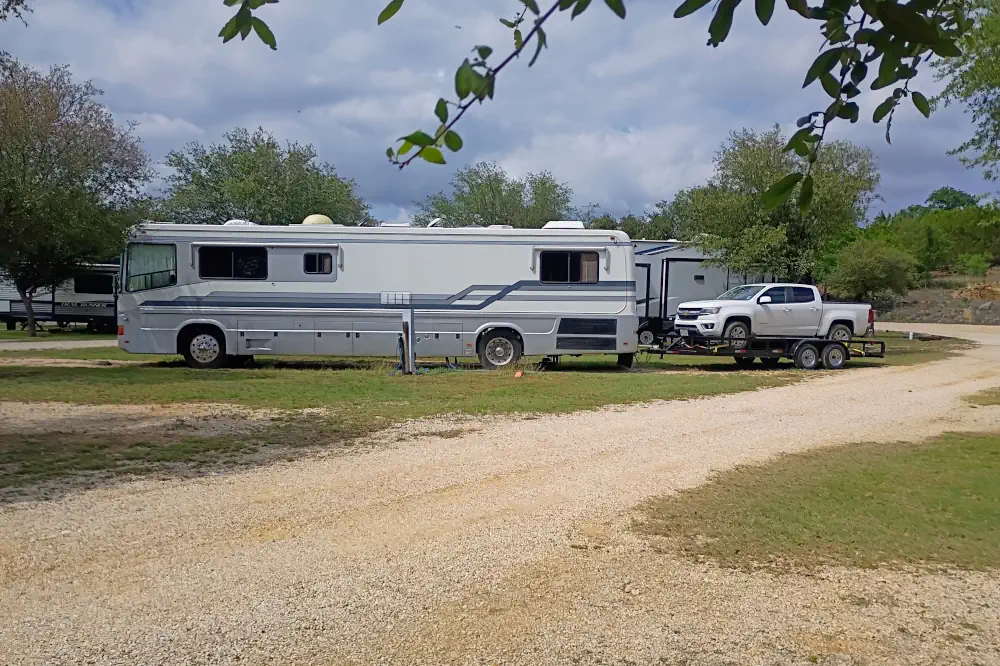
One of the first questions people ask about full-time RV life — right after “where do you shower?” — is what we eat out here. And I think they’re picturing one of two things: gas station hot dogs, or some Instagram fantasy where I’m whisking hollandaise at a folding table with a mountain view.
The truth is somewhere in the middle, and honestly? We eat better on the road than a lot of people do in a full-size house. It just took figuring out how to cook well in a kitchen the size of a closet — and deciding, early on, which restaurants out there actually deserve our money.
That’s what this page is about — eating well on the road, full-time, from a kitchen most people would call a closet. Consider it the hub for everything food-related here at RV Roadie: how we cook, where we eat, and what we’ve learned doing it full-time.
Our Kitchen: A 1993 Time Capsule (Almost Restored)
Let me set the stage. Our coach is a 1993 that we’ve been restoring, and we’re almost done.
It came with a microwave/convection oven combo, which sounds fancy until you actually look at it. I use it strictly as a microwave. The convection side has a control panel that looks like it was designed for launching satellites, and this thing is from back in the day, ya know. I’m sure somebody out there has mastered a 1993 convection oven. It will not be me.
There are also two propane burners inset into the countertop, and I’ll be honest with you — I hate using them. Two reasons. One, they’re a nightmare to clean out. Two, I have a healthy fear of propane in a small space, and if you’ve read about my husband’s broken nose and our propane leak, you know that fear was earned. Well. Some lessons stick.
So What Do I Actually Cook On in an RV?
Two things, and they handle nearly everything:
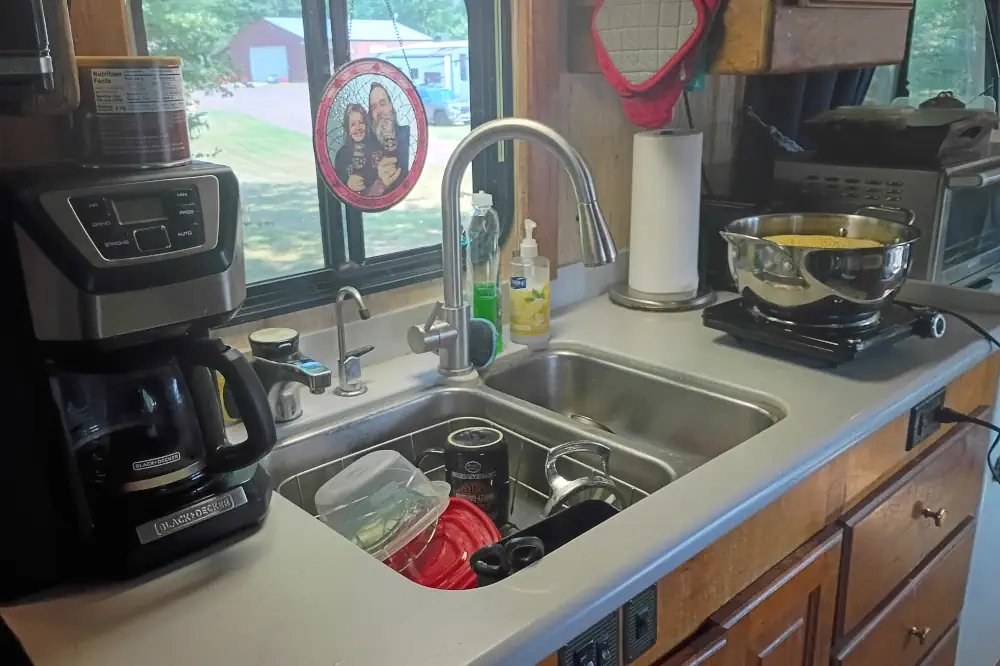
- A tabletop electric burner. Sits on the counter, wipes clean in ten seconds, and doesn’t involve open flames in my kitchen.
- A countertop all-in-one oven — air fryer, convection oven, broiler, and dehydrator in one standalone unit. I love this thing. It does everything that intimidating relic over the stove was supposed to do, except I actually understand the buttons.
And that’s the first big lesson about eating well on the road: you don’t need your RV’s built-in kitchen to be good — you need two or three appliances you’ll actually use. Everything else is just taking up counter space you don’t have.
The Instant Pot: The Hardest-Working Thing in This Rig
If the countertop oven is my favorite, the Instant Pot is the one I’d grab in a fire.
Most of my go-to meals happen in it — soups, chilis, rice, basically anything where I can make a big batch and freeze the extras for a future meal. That freezer stash is the real secret. When we’ve been gone all day and roll back to the rig tired and starving, that’s not a “let’s start chopping vegetables” moment. That’s a “past Evie already made dinner” moment, and past Evie has never let us down.
It’s the reason the Instant Pot made our list of essential RV gear — in a kitchen where counter space and power both matter, one pot that does everything is hard to beat.
Why We Mostly Eat at Home
Here’s the honest answer, and it’s not about money (though that part doesn’t hurt): it comes down to trust.
When you travel full-time, you eat in a lot of unfamiliar towns, and you learn quickly that not every kitchen deserves the benefit of the doubt. All it takes is one glance through a fast food pass-through window at a young kid picking his nose when he thinks nobody’s looking. Once you’ve seen that, your own little 1993 kitchen starts looking like a five-star establishment.
So our rule is simple: we cook at home unless a place has earned our confidence — real food, cooked by people who care, with a reputation to back it up. If we can’t say that about a restaurant, the Instant Pot wins again. It helps that we plan meals around what we can actually store and cook in a small rig — a little grocery strategy goes a long way when your fridge is the size of a dorm mini and your nearest store might be forty miles back the way you came.
The side benefit is what it does for the budget. Eating at home most of the time is one of the biggest reasons we can afford this life at all — I break down exactly where the money goes in our guide to affordable RV living, but the short version is: the couple that cooks together, stays solvent together.
How We Find Restaurants Worth Trusting
When we do eat out, we don’t gamble. Over the years we’ve landed on two methods that have never steered us wrong:
Ask the people who live there. The single best restaurant recommendation we’ve gotten came from a campground owner — that’s how we found Rio Ranch Cafe in Kerrville, a family-run place we now go back to over and over. Campground owners and workers eat local all year long. They know exactly which places are worth your time, and they’ll tell you if you ask.
Dig past the tourist reputation. Popular does not mean good, and it definitely doesn’t mean fresh. It took us until our second winter in South Padre Island — and some very honest locals — to learn that most of the island’s “fresh seafood” arrives on a truck, sometimes from the other side of the planet. The places that actually catch their own? That’s a short list, and we wrote it all down in our guide to the best seafood restaurants in South Padre Island.
That’s the pattern wherever we go: skip the billboard, talk to a local, and when a place is family-run and cooking real food, be a regular while you’re in town. Those meals become part of the travel memories, not just fuel. That’s exactly what happened at Sundown Saloon and Campground up in northern Wisconsin — a place we trusted so completely that we came back six summers running, and one of the cleanest kitchens either of us has ever set foot in.
Where This Page Goes From Here
This is a living hub, and there’s a lot more coming. I’m working on a guide to easy RV meals when your counter space is measured in inches, and another on cooking in an RV without an oven. I’ll link them here as they’re ready.
In the meantime — cook more than you eat out, trust locals over billboards, and befriend your Instant Pot. That’s the whole system, and it’s served us well from Texas to everywhere.
Share and enjoy and Happy travels!
Frequently Asked Questions
Can You Really Cook Good Meals in an RV Kitchen?
Absolutely — but not the way you cook in a house. The trick is working with your limitations instead of fighting them: a couple of reliable countertop appliances, one-pot meals, and batch cooking with a stocked freezer. We eat better in our 1993 coach than we ever expected to, and most nights dinner takes less effort than it did in a full-size kitchen.
What Appliances Do You Actually Need To Cook in an RV?
Fewer than you think. Our entire kitchen runs on three things: a tabletop electric burner, a countertop all-in-one oven (air fryer, convection, broiler, and dehydrator in one), and an Instant Pot. That combination covers soups, chilis, rice, roasted and air-fried meals, and leftovers — without ever lighting the built-in propane burners.
Do You Have to Use Your RV’s Propane Stove?
No, and we mostly don’t. Between the cleaning hassle and having propane flames in a small space, we prefer electric countertop appliances whenever we have hookups. If you do run propane inside, put a leak detector at the top of your shopping list — we learned that one the hard way.
Is it Cheaper to Eat in Your RV or Cheaper to Eat Out?
Cooking at home wins, and it’s not close. Food is one of the biggest categories in any full-timer’s budget, and cooking most of your own meals — especially batch meals where the leftovers become a second dinner — is one of the easiest places to claw money back without feeling deprived.
How Do You Find Good Restaurants When You’re Always in New Towns?
Ask locals, not the internet — campground owners and workers are the best restaurant critics in any town. We look for family-run places cooking real, homemade food with a solid local reputation, and we skip anywhere that’s coasting on tourist traffic. When a place earns our trust, we become regulars for as long as we’re parked nearby.